Our Story at a Glance
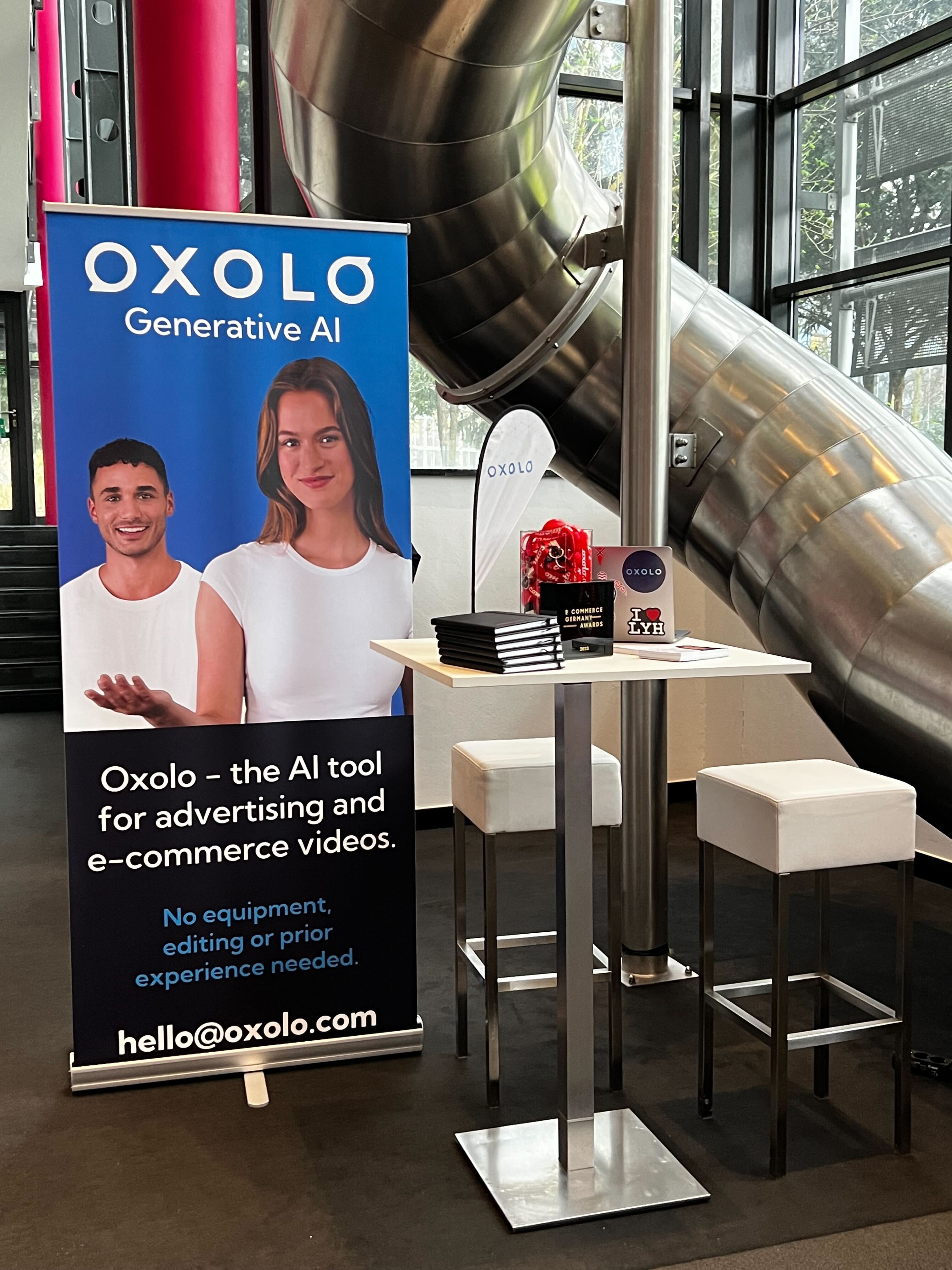
Oxolo launched in 2020 as an AI video software that helped teams generate videos from a product link.
Oxolo grew to more than 500,000 users across 75+ countries, built a 50-person team, and served brands like Deloitte and Rothschild.
We stopped the AI video direction because technology at the time could not meet our quality bar.
We also watched the AI content market become crowded and increasingly defined by an output-quality arms race that made products converge.
We stepped back and realized the bigger constraint in most organizations was not creation, but coordination.
We found that meetings were the sharpest point of the coordination problem, and estimates suggest poorly organized meetings cost up to $399B per year in the United States.
himala is a new product direction within Oxolo, which remains the parent company, and it is an all-in-one meeting assistant built as an ecosystem to tackle coordination end-to-end.
The previous AI video product has been discontinued and is no longer offered. The same team has carried the lessons from Oxolo into himala.
Oxolo: The Chapter That Led to himala
Before himala, we were building a different kind of AI product. Back then, we were known as Oxolo and were working on an AI-generated video platform to help teams produce content more efficiently.
The product launched in 2020, allowing users to paste a product link into our software to instantly generate AI videos with realistic avatars, scripts, voice-overs, and performance tweaks for optimized e-commerce, training, or marketing.
We grew to over 500,000 users across 75+ countries, built a 50-person team of talented individuals, served brands such as Deloitte and Rothschild, and earned multiple AI Innovation Awards for ”outstanding achievements and innovations in the field of artificial intelligence”.
Then we made a deliberate decision to stop.
Why We Stopped
Oxolo’s product was appreciated and adopted by businesses worldwide, but we weren’t satisfied with the quality. The gap between what we expected from ourselves and what technology at the time could realistically deliver was simply too large.
In practice, the hardest quality gaps to bridge were in AI vision, avatars, and lip-sync, the parts that determine whether a video feels professional or uncanny.
Meanwhile, the market quickly became crowded with tools focusing on AI output of various sorts, among them video. Many of the new entrants were platform giants and well-funded players with effectively unlimited compute, data, and distribution.
In such environments, differentiation narrows fast. When everyone is chasing raw output quality, products start to converge, and the work becomes about scale rather than solving a deeper problem.
We took a step back and had a rethink, and gradually, we identified a unique opportunity to apply our AI expertise elsewhere, where it could create deeper, longer-term value.
The Real Problem That Had to Be Solved
We realized that, in terms of business efficiency, most teams aren’t limited by their ability to produce. There are plenty of talented people who create great things, and there are good tools to help them improve quality and speed. Instead, teams and businesses are primarily blocked by the coordination required to get to production, move through it together, and follow through afterward.
We found, during this chapter of our journey, that the key to unlocking productivity and efficiency is coordination. This is true whether it’s planning a campaign, preparing a board update, running a sales cycle, handling an incident, rolling out a new process—or creating a video.
Production speed and quality can absolutely improve with output tools, like what Oxolo built, but that matters far less if coordination is weak.
Researching the issue further, we found the sharpest claw of the coordination-monster to be the meeting. The meeting trap, the meeting madness, and the meeting hangover are different names for the same phenomenon, where excessive, unproductive, and back-to-back meetings replace actual work and reduce productivity.
Estimates suggest poorly organized meetings cost up to $399B per year in the United States alone.
So we started there: “How can we make meetings better?”
himala: Not Another Meeting Assistant
The result of our rethink is himala—an all-in-one meeting assistant. That word—all-in-one—is important because himala is not another meeting assistant trapped in a silo. himala is an ecosystem built to solve the global coordination problem end-to-end, with the meeting at the center.
In developing himala, our definition of what a meeting actually is kept expanding. The more we looked, the more we realized the meeting isn’t a single moment but a workflow. And our product grew with that reality.
A meeting is not…
A conversation or a calendar event
Alignment if nobody leaves with the next steps
A transcript, summary, or set of notes
A status dump that could have been async
Successful because it “felt productive”
Not complete if stakeholders outside the room stay uninformed
A meeting is…
A checkpoint in a workflow
A negotiation space
A compression of weeks of async context
A coordination moment where scattered context becomes shared understanding
A hub where inputs flow in from different sources: documents, threads, tickets, data
A place where misalignment surfaces early
A place where outcomes should become durable and shareable
We developed himala to operationalize these truths, to match what meetings actually are, and to help teams move from meetings that merely document conversation to meetings that drive execution.
These are some of the smart capabilities that form himala’s ecosystem, tackling coordination at every stage:
Meeting Preparation: Pulls in context from emails, chats, docs, and calendars to prime participants, surfacing key threads and gaps before the call starts.
AI Meeting Note Taker: Captures live discussion, decisions, and action items in real-time—beyond basic transcripts, it flags misalignments and suggests resolutions.
Email Auto-Draft: Generates crisp post-meeting summaries and updates, tailored for stakeholders, ensuring nothing falls through the cracks.
Meeting Scheduling Links: Streamlines invites with smart availability matching, pre-loading agendas, and prep materials for seamless workflows.
Attendee Intel: Profiles participants with relevant history, roles, and prior contributions to accelerate context-building and relevance.
These are a handful of the core capabilities. Teams can combine them in countless use cases depending on their workflows and external tools.
The Oxolo Legacy
himala is a new product direction within Oxolo. The previous AI video product has been discontinued and is no longer offered. The same team has poured everything we learned building and scaling Oxolo — quality standards, reliability, automation, and user trust—into himala.